
Cellar door · wine shop · wholesale
A bag fit for the last bottle of the night.
We picture sun-warmed stone, rows of vines, and a customer easing a bottle into a bag that fits the moment. Indivaras wine bags are woven in small Indian workshops for independents, small estates, and tasting rooms that want fabric with weight and texture in the hand, an understated look at the till, and the label easy to read—details your customers notice and that you can merchandise with confidence.
Email us about wine bagsWhy jute outperforms paper on the shelf and in the hand
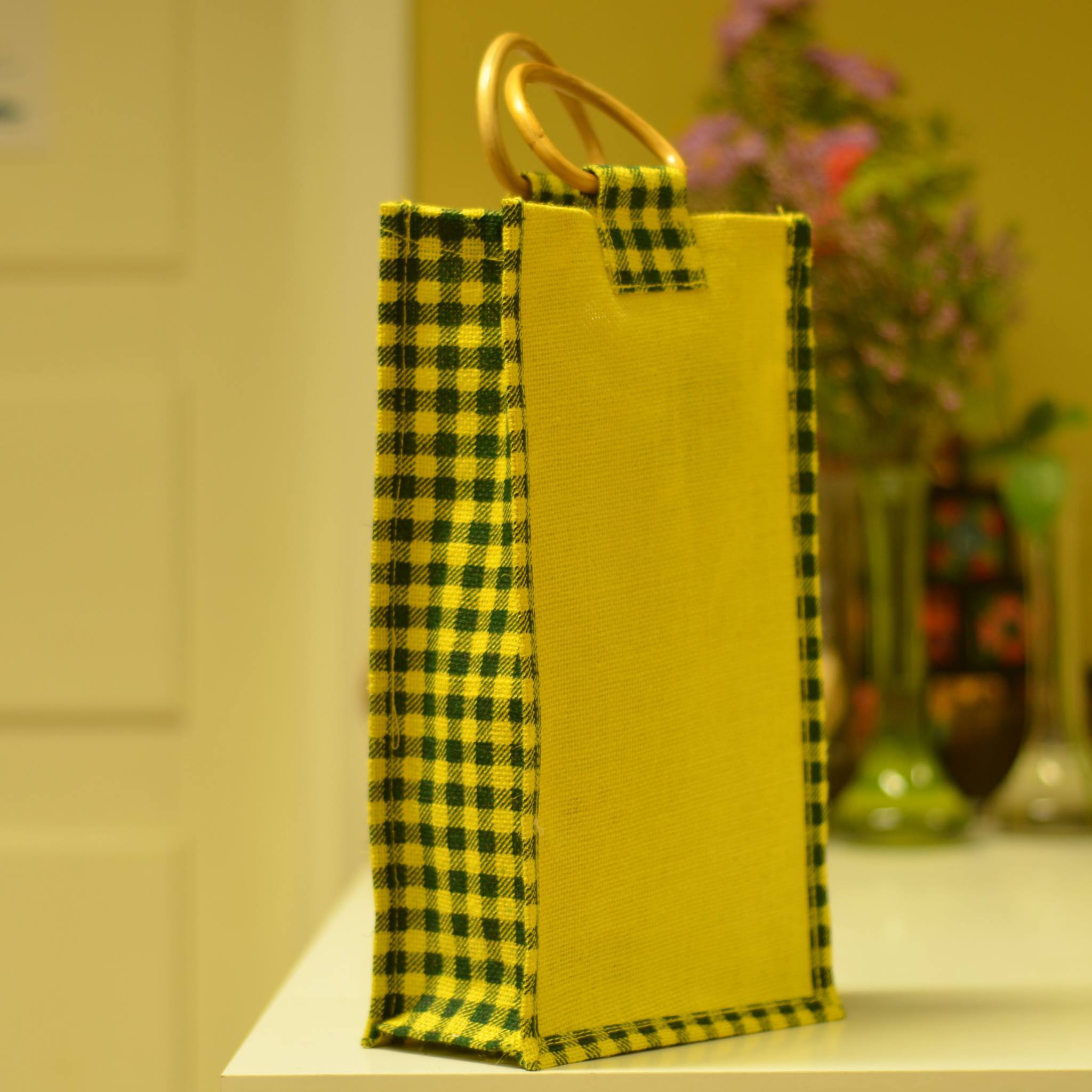
Jute is a bast fibre: renewable, biodegradable, and breathable, so the bottle is not sealed inside brittle film or cold laminate. Unlike a flat kraft sack, the cloth keeps its body in damp weather instead of turning to pulp after a wet afternoon. It feels warm in the hand, holds colour in the weave, and photographs well for websites and shelf talkers. Many buyers find jute priced close to paper; at the till the impression is different—craft, durability, and a clear step up for your brand, with the front label still visible.
Jute, soil, and what happens after
The vineyard sets the mood; the sections below cover what jute is, how it behaves in the shop, and what happens after the sale.

Customers and buyers ask where things come from and what they leave behind; jute is a straightforward part of that answer. The fibre is cut from the stem of annual Corchorus plants that add biomass in the field. In traditional rotations, it can be grown beside food crops without displacing smallholders. Much of the crop is rain-fed, which keeps irrigation demand lower than for many thirsty fibres. As a finished bag, you see gentle variation in shade, a faint cellulose smell, and fibres that break down in soil or compost on a human timescale instead of shedding microplastic for years.
- Annual harvest: jute is cut from the stem each season, not drawn from fossil feedstocks.
- Biodegradability: jute cloth breaks down in compost or soil on practical timescales, unlike polyethylene bags that persist as microplastic.
- Processing: turning bast into yarn still uses water and energy, but lifecycle studies generally favour natural fibres over single-use plastic carriers.
- Breathability in retail: an open jute weave allows some air movement around the bottle, unlike sealed film or glued paper—relevant if bags sit under warm display lights.
- Reuse: sturdy handles and gussets suit another shopping trip, which extends useful life and spreads environmental impact across more uses.
- Pace of production: we place volume with workshops where skilled weaving sets the speed, so batch sizes stay within what makers can run well.
Your crest, pattern, or vintage story on the cloth

On larger orders, we can print bag bodies and panels, from single colour to richer treatments depending on artwork and quantity. Send print-ready files or your cellar brand guidelines, indicative annual volume, and preferred handle and gusset styles; we coordinate the print process, proofs, and minimum order quantities with the same workshops that weave the base fabric.
Where these bags belong
- Independent wine shops that want a bag to match a curated shelf and staff picks.
- Small estates, châteaux, and visitor tasting rooms where the walk from bar to car is part of the visit.
- Distributors assembling regional gift packs and needing outer packaging that feels as rooted as the wine inside.
How we run a programme with you

Weaving and finishing are done with small makers in India. Sampling, lead times, and repeat orders are handled by our small team in Estonia as a single point of contact. Send bottle formats, your target retail price band, and whether you need plain stock or printed runs; we reply with materials, lead times, and figures you can plan against.
Photo credits
Mood images by Matthew Vins de Bourgogne Kelsey Knight JustPhotof · Unsplash License.